



By John Chola
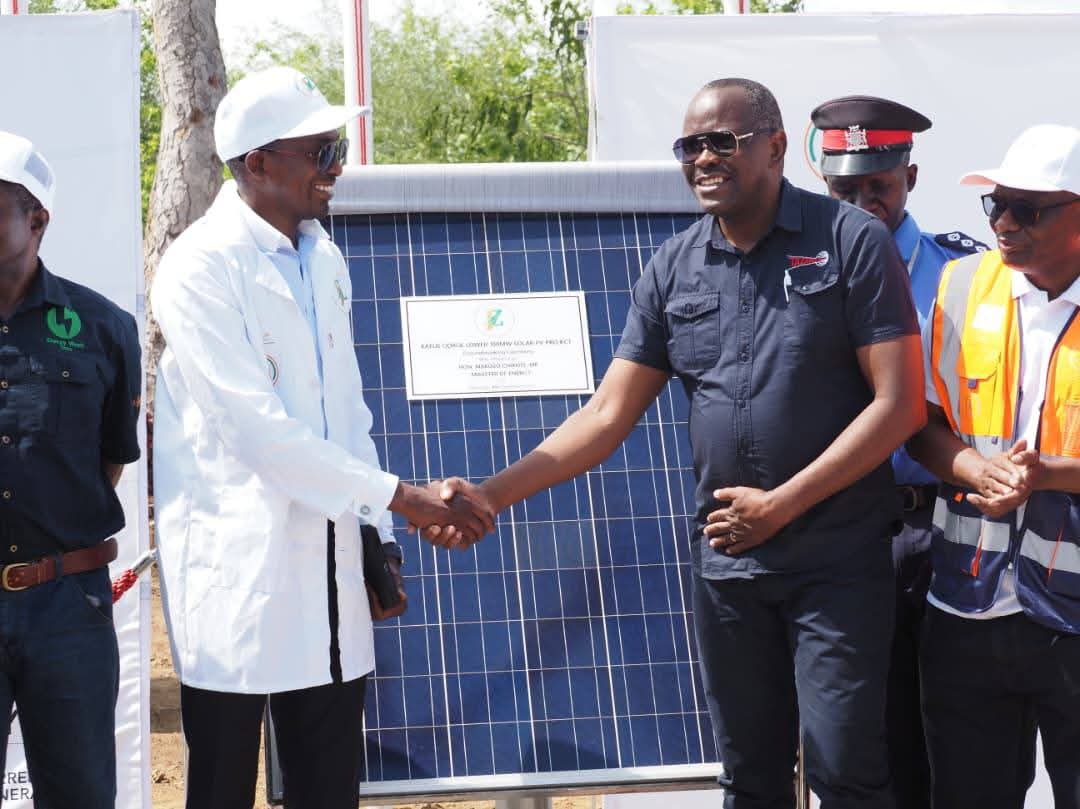
Zambia’s desperate race to stabilise its failing power system has entered a decisive new phase with the groundbreaking of the Kafue Gorge Lower 100MW Solar Photovoltaic Project in Chirundu’s Sikoongo Chiefdom — a development that signals both urgency and ambition in equal measure.
For a nation where electricity access still hovers around 33–45 percent, according to the World Bank and the Rural Electrification Authority, and where load-shedding intensified to as high as 12–14 hours per day in 2024/2025 due to the most severe drought in more than four decades, the launch of this solar project is more than ceremonial. It represents a turning point.
A Push Toward Energy Diversification
The project, jointly executed by ZESCO and Jigsco Energy Corporation Limited, includes a 100MW solar farm, a modern substation, and a 15-kilometre transmission line linking directly into the Kafue Gorge Upper grid system — the backbone of the country’s power dispatch architecture.
With a tight 12-month construction schedule, the plant is expected to inject much-needed renewable power into a national grid strained by collapsing hydropower output.
In 2025, generation from major hydropower stations such as Kariba North Bank plunged dramatically as water levels fell below operational thresholds, leaving ZESCO with supply deficits estimated at upwards of 750MW.
Leadership Positions Solar as the New Pillar
Speaking at the ceremony, ZESCO Managing Director Eng. Justin Loongo described the project as “a cornerstone in building a secure, resilient and robust energy future,” adding that it aligns squarely with President Hakainde Hichilema’s directive to transform Zambia into a regional electricity exporter by strengthening renewable energy capacity.
He further revealed that the selected transmission route was deliberately designed to avoid displacing households, safeguard biodiversity, and reduce cost overruns — a key concern in large infrastructure rollouts.
Energy Minister Makozo Chikote reinforced that message, calling the project “a practical step toward achieving energy security,” crediting government reforms such as streamlined licensing, improved tariff structures, and expanded private-sector participation for accelerating renewable energy investments.
A Climate-Resilient Pivot
With over 85 percent of Zambia’s power coming from hydropower, the extended drought — exacerbated by El Niño and long-term climate variability — has exposed the fragility of the country’s energy model.
Project Manager Philip Pretorious described the new development as a “hybrid continuity project designed to complement the hydropower station at Kafue Gorge,” signalling Zambia’s increasing tilt toward solar-hydro balancing to stabilise supply during future drought cycles.
Local Impact and Economic Promise
The project also places community empowerment at its core.
Pretorious said the venture will roll out Corporate Social Investment (CSI) initiatives, including technical training, youth skills programmes, and job creation for residents of Sikoongo Chiefdom, where unemployment and energy poverty remain acute drivers of underdevelopment.
With Zambia’s private sector reporting reduced production hours, manufacturing slowdowns, and losses running into hundreds of millions due to power cuts, the Chirundu solar project symbolizes both relief and renewed confidence for businesses hoping for a more predictable energy landscape.
Investment Scale and Market Context
While official figures remain undisclosed, regional benchmarks indicate that the Kafue Gorge Lower 100MW Solar Project likely falls within the US$90 million to US$120 million investment range. Comparable utility-scale solar projects in Southern Africa have landed between US$0.85 million and US$1.2 million per MW, depending on land preparation, grid integration, and technology choices.
For Zambia — which aims to add over 1,000MW of renewable capacity by 2030 under its National Energy Policy — the investment reinforces the growing role of private capital in resolving long-standing energy constraints.
A Beam of Hope in a Dark Season
For millions of households accustomed to planning their days around blackouts, and for industries operating at half-steam, the Chirundu groundbreaking is more than a construction milestone. It is a signal that Zambia is finally bending the curve toward a diversified, climate-resilient and investment-friendly power future.




Leave a Reply