



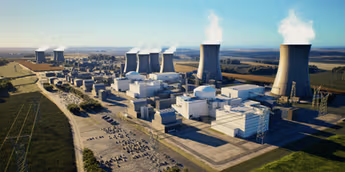
Ethiopia has officially turned a long-held vision into reality with the fully operational Grand Ethiopian Renaissance Dam (GERD), now the largest hydroelectric power plant in Africa with a combined capacity of 9.6 GW. This engineering marvel on the Blue Nile River has doubled the country’s power generation capacity, significantly improving electricity access for homes, industry, and rural communities. By expanding energy production, GERD is accelerating Ethiopia’s transition from a power-constrained economy to a regional energy exporter, supplying clean, renewable electricity across the Horn of Africa.
The impact of GERD extends far beyond energy statistics. With expanded electrical capacity, Ethiopia can now support industrial parks, agribusiness, and digital infrastructure, fostering economic diversification and job creation. Reliable power also enhances quality of life for millions previously affected by frequent outages, boosting productivity and connectivity in both urban and rural areas. Economists say the dam’s output solidifies Ethiopia’s position as a key player in Africa’s renewable energy landscape and strengthens regional energy integration.
While the project has faced diplomatic challenges, particularly with downstream countries concerned about Nile water flow, Ethiopian officials emphasise that GERD offers shared economic benefits through cross-border electricity trade and infrastructure collaboration.
As nations like Kenya, Djibouti, and Sudan expand power imports from Ethiopia, the dam symbolizes a new chapter in East African cooperation, sustainable development, and energy security.
Leave a Reply