



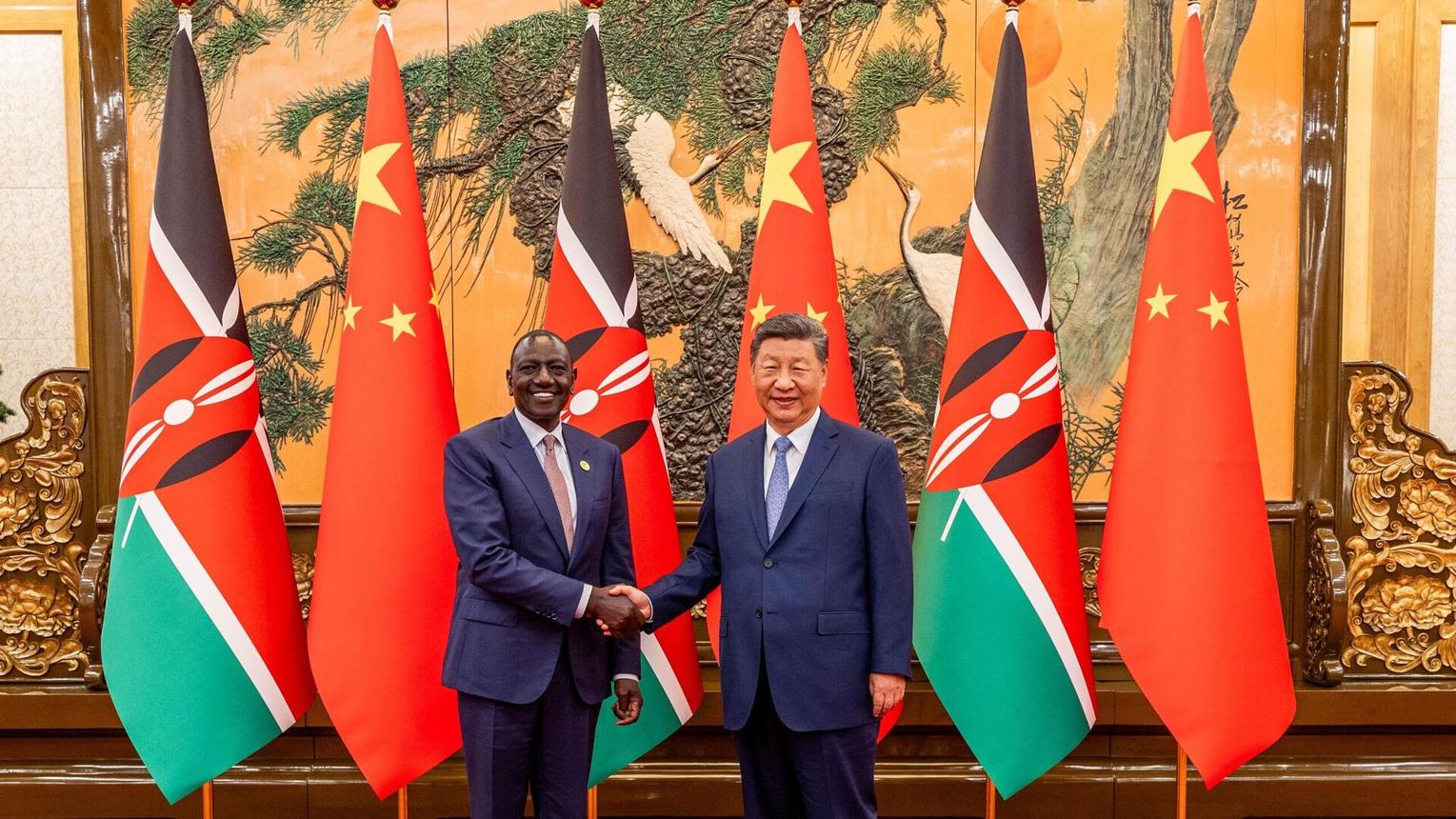
Kenyan President William Ruto has said Kenya has the potential to pursue a development trajectory similar to that of China, pointing to the country’s remarkable transformation from a developing economy into one of the world’s largest economic powers. According to Ruto, Kenya can accelerate its own growth by prioritising long-term investment in infrastructure, industrialisation, innovation and human capital while creating an environment that encourages private sector expansion and foreign investment.
Speaking on Kenya’s economic ambitions, the President highlighted the importance of consistent policy implementation and strategic planning in achieving sustainable development. He noted that China’s experience demonstrates how investment in manufacturing, transport networks, energy infrastructure and education can significantly improve productivity, create employment and raise living standards. While acknowledging that every country faces unique challenges, Ruto said the underlying principles of disciplined economic planning and investment remain relevant for Kenya’s development agenda.
Kenya has increasingly positioned itself as one of Africa’s fastest-growing economies, with significant investment in roads, railways, renewable energy, digital infrastructure and industrial parks. These initiatives form part of the government’s broader strategy to strengthen manufacturing, increase exports and reduce dependence on imported goods. Authorities also hope to attract greater foreign direct investment by improving the country’s business environment and expanding access to regional and international markets.
The President’s remarks come as African governments continue to examine successful development models from around the world. China’s rapid economic rise over the past four decades has attracted particular interest due to its emphasis on infrastructure-led growth, export-orientated industrialisation and long-term strategic planning. Several African countries have sought to adapt elements of this approach to their own development priorities while maintaining policies suited to local conditions.
For Kenya, industrialisation remains central to its long-term economic strategy. Expanding domestic manufacturing is expected to create employment opportunities, increase value addition and strengthen the country’s competitiveness within the African Continental Free Trade Area (AfCFTA). Investments in digital technology, logistics and energy infrastructure are also expected to support productivity across agriculture, manufacturing and services.
Economists note that achieving sustained high growth will require continued investment, sound macroeconomic management and strong collaboration between government and the private sector. Maintaining investor confidence, improving access to finance and strengthening institutions will be key to ensuring Kenya can translate its development ambitions into tangible economic outcomes.
As Kenya continues implementing its economic transformation agenda, President Ruto’s vision reflects a broader aspiration shared by many African nations: leveraging infrastructure, industrial development and innovation to achieve faster, more inclusive and sustainable economic growth
Leave a Reply