



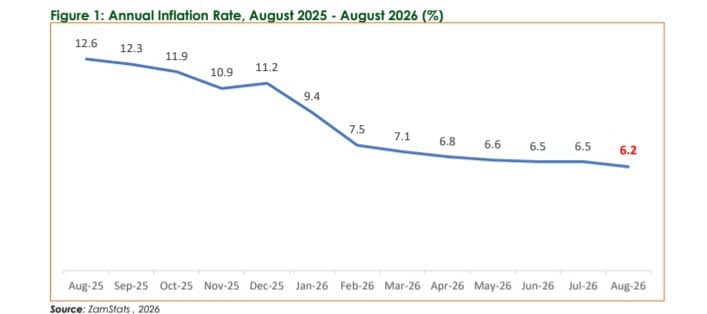
The annual inflation rate has eased to 6.2 percent in August 2026, down 0.3 percentage points from the 6.5 percent recorded in July, a trajectory that cements consumer price growth within the Bank of Zambia’s target band of 6 to 8 percent.
The latest data from the Zambia Statistics Agency (ZamStats) indicates that on average, the cost of a representative basket of goods and services increased by 6.2 percent between August 2025 and August 2026.
“This means on average prices of food items increased by 6 percent between August 2025 and August 2026. This was mainly attributed to price movements in prices of food items such as Cereals (Breakfast Mealie meal, Roller mealie meal, Maize grain, Rice local, Wheat Plain Household Flour)); Sugar, Cooking oil and Dried beans,” said ZamStats Acting Statistician General Chola Nakazwe Daka.
Daka further disclosed that the annual non-food inflation for August 2026 was recorded at 6.6 percent compared to 6.7 percent in July 2026.
The Acting Statistician General noted that this outturn was mainly attributed to price movements in prices of non-food items such as Fuels and lubricants (Diesel, Petrol, Paraffin, Engine oil , Lubricants (brake fluids)) and Purchase of Vehicles.
While the figures point toward sustained economic stability, analysts caution that external risks such as global oil price movements and regional weather variations will require continued fiscal discipline and prudent monetary management through the second half of the year.
Lusaka based economist Kelvin Chisanga says offsetting risks remain as the exchange-rate pressures could quickly feed into fuel, fertiliser, transport and imported goods, while climate shocks could reverse food-price gains adding that global fuel and commodity prices also remain external vulnerabilities.
“We must also consider electoral and political risks. Although elections may reduce some uncertainty, concerns over the electoral process, political tensions and post-election developments could affect investor confidence and Zambia’s risk premium,” Chisanga stated.


Leave a Reply