



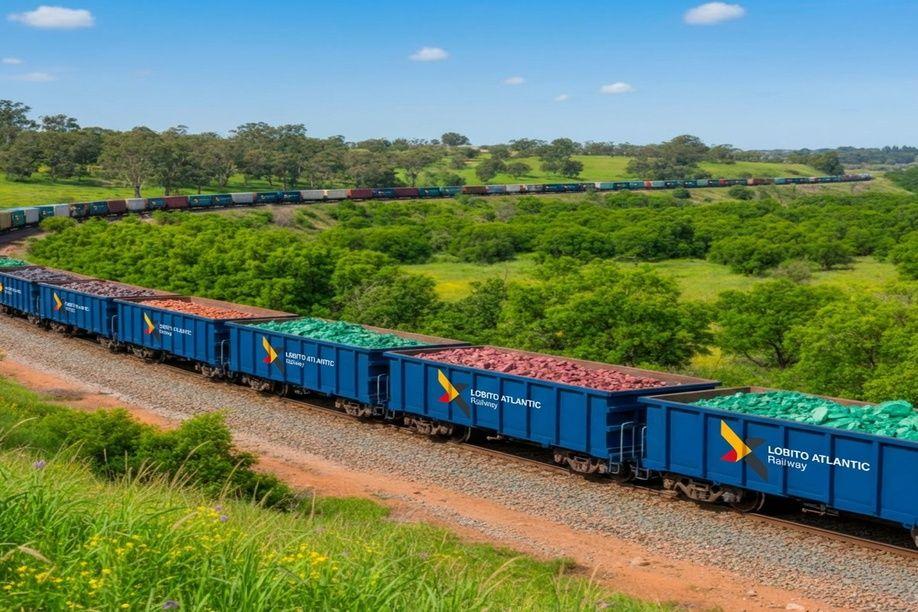
Zambia’s growing participation in the Lobito Corridor could open a new chapter for the country’s mining industry, with manganese emerging as a potential second pillar alongside copper. As the corridor develops into an important westward route connecting Central Africa’s mineral-producing regions with Angola’s Atlantic coast, the economics of minerals that have historically struggled with transport constraints could begin to change.
Copper has understandably dominated the Lobito conversation, particularly given Zambia and the Democratic Republic of Congo’s ambitions to expand copper production. But Zambia’s manganese resources present a different opportunity. Deposits are distributed across several parts of the country, creating the possibility of a wider mining and processing ecosystem if investment, infrastructure and an appropriate regulatory framework can be brought together.
Logistics could be the critical missing piece. Mining a deposit is only commercially attractive if producers can move material to market at a competitive cost. The Lobito Corridor offers Zambia another route to international markets and could reduce reliance on established southern and eastern corridors. For bulk commodities such as manganese, where transport costs can have a major impact on project economics, reliable rail and port connectivity could materially improve the investment case.
But Zambia’s real opportunity is not simply to put more manganese on trains. The bigger prize is to use improved connectivity to build a domestic value chain. Beneficiation and the production of higher-value manganese products could create demand for Zambian engineering companies, mining contractors, logistics firms and technical services while allowing a greater share of the mineral’s economic value to remain in the country.
That approach would also fit into the broader economic ambitions surrounding the Lobito Corridor. The corridor has increasingly been viewed not only as a transport project but as a potential platform for local content, supplier development and downstream processing. The African Development Bank’s Lobito Integrated Economic Corridor project similarly places emphasis on improving transport connectivity and reducing transit constraints.
For Zambia, this creates an opportunity to rethink what a mining economy can look like. Copper can remain the dominant commodity, while manganese, along with other critical minerals, provides additional sources of investment, exports and industrial activity. The challenge will be ensuring that geological potential is matched by exploration capital, reliable power, processing capacity, skilled labour and infrastructure capable of supporting commercial-scale operations.
The ultimate test of the Lobito Corridor will therefore not be how many tonnes of minerals it carries to the Atlantic. It will be how much new economic activity develops around that movement. If Zambia can use the corridor to move from simply exporting minerals to processing more of them, developing local suppliers and building new industrial capabilities, manganese could become an important part of a much larger diversification story.


Leave a Reply