



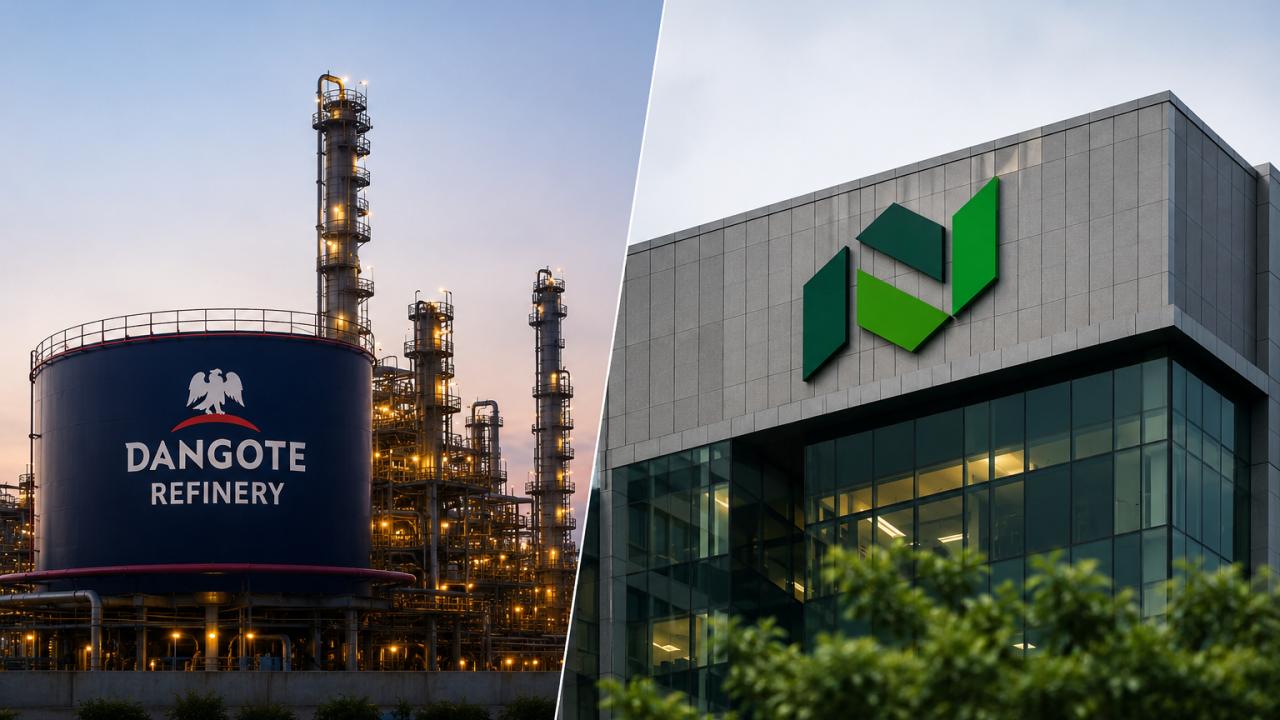
The refinery has reduced its debt by $570 million to $5.7 billion as production and sales have increased, according to reports. The deleveraging comes at a strategically important moment for the business, with investors preparing to get an opportunity to buy into one of the continent’s most ambitious industrial assets.
The improvement in financial performance is particularly striking. Dangote Refinery reported $1.82 billion in profit during the first half of 2026, compared with a $476 million loss during the same period of 2025. The turnaround reflects the refinery’s increasing utilisation and its growing role in supplying refined petroleum products to Nigeria and international markets.
Now comes the next test. Dangote plans to raise approximately $1.63 billion through an initial public offering, with the transaction expected to become Africa’s largest IPO. The offering is designed to broaden the refinery’s investor base while providing capital for a wider expansion strategy. Reports indicate that the IPO will target millions of retail investors, potentially making the refinery one of the continent’s most widely held major industrial assets.
The ambitions extend well beyond the refinery’s current 700,000 barrels per day capacity. Dangote plans to invest around $14.3 billion to double capacity to 1.4 million barrels per day by 2029, putting the facility on course to rival the world’s largest refining complexes. The company is also pursuing petrochemical expansion and a second major refinery project in Kenya.
That expansion has implications far beyond Dangote Group. Nigeria has historically exported crude oil while importing large volumes of refined petroleum products. The emergence of a large domestic refinery changes that equation by creating the possibility of greater domestic refining, increased exports and stronger regional fuel supply. The refinery has already become a major participant in international crude markets, with recent purchases of Nigerian crude rising substantially as it ramps up operations.
The proposed Kenyan refinery takes the strategy into East Africa, but it also illustrates the scale of the challenge. Unlike Nigeria, Kenya does not currently have commercial crude production sufficient to supply such a facility, meaning feedstock, infrastructure, financing and regional coordination will become critical questions. The project is expected to cost between $15 billion and $16 billion and is targeted for completion by 2030.
For Dangote, therefore, the $570 million debt reduction is only one part of a much larger transformation. The company is attempting to move from proving that Africa can build a world scale refinery to proving that such an asset can anchor a continent wide energy business. If the IPO succeeds and the expansion plans are executed, Dangote’s refinery could become not merely Africa’s biggest refinery, but one of the continent’s most consequential industrial platforms.

Leave a Reply