



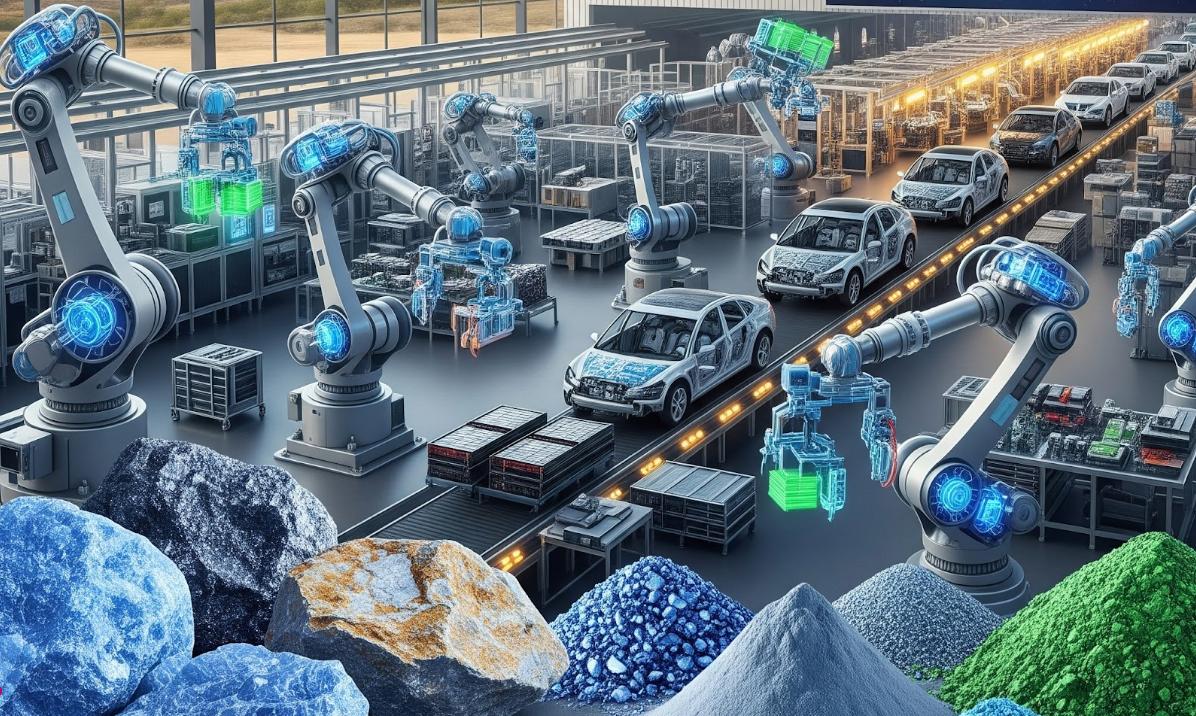
French mining group Eramet is deepening its investment in Africa’s battery metals sector through a major expansion of manganese processing in Gabon, reinforcing the country’s strategy to move beyond raw mineral exports and establish itself as a regional processing hub.
Under a memorandum of understanding signed with the Gabonese government, Eramet will study the development of industrial facilities capable of processing up to 700,000 tonnes of manganese ore annually by 2031, representing one of the country’s most significant downstream mining investments in recent years. The agreement comes as Gabon prepares to ban exports of unprocessed manganese from January 2029, a policy intended to encourage domestic beneficiation and industrial growth.
The proposed programme comprises three major projects: a battery-grade manganese oxide plant targeting the electric vehicle market, the rehabilitation and expansion of the Moanda Metallurgical Complex, and a new manganese alloy facility serving global steel manufacturers.
Together, these projects are designed to increase local processing capacity while supporting Gabon’s ambition to capture a greater share of the value generated from one of its most important mineral resources. Eramet, through its subsidiary Comilog, already operates one of the world’s largest manganese mining businesses in Gabon, making the expansion a natural progression of its long-standing presence in the country.
Although steel production still accounts for nearly 90% of global manganese consumption, battery demand is emerging as one of the fastest-growing markets for the metal. High-purity manganese plays an increasingly important role in next-generation lithium-ion batteries used in electric vehicles and large-scale energy storage systems, offering manufacturers a lower-cost alternative to battery chemistries with higher nickel and cobalt content.
By investing early in battery-grade processing, Eramet is positioning itself to benefit from a market expected to expand significantly over the coming decades.
The agreement also reflects a broader shift across Africa, where governments are increasingly implementing policies aimed at retaining more value from their mineral resources. Countries including Zambia, the Democratic Republic of the Congo, Zimbabwe and Namibia are promoting local processing, refining and manufacturing to reduce dependence on raw commodity exports while supporting industrialisation and employment.
Gabon’s manganese strategy aligns with this continental trend, demonstrating how critical minerals are becoming central to long-term economic development plans.
Despite the opportunity, the project faces several challenges. Battery-grade manganese processing requires reliable electricity, advanced technology and competitive operating costs, while the market remains heavily influenced by Chinese refining capacity. Eramet has indicated that each proposed facility will proceed only after detailed technical studies, environmental assessments and commercial evaluations confirm long-term viability. Gabon has committed to supporting the energy infrastructure needed to make the projects commercially sustainable.
For investors, the expansion signals growing confidence in Africa’s role within global battery supply chains. As demand for critical minerals continues to increase, companies are looking beyond mining to establish integrated value chains that include refining and advanced materials production. This approach not only strengthens supply security but also enables producing countries to capture greater economic value from their natural resources.
If successfully implemented, the Gabon–Eramet partnership could become a model for future critical mineral development across Africa. By combining resource extraction with downstream processing, the initiative has the potential to create skilled jobs, attract industrial investment and reinforce the continent’s position in the industries powering electric mobility, artificial intelligence and the global energy transition.
Leave a Reply