



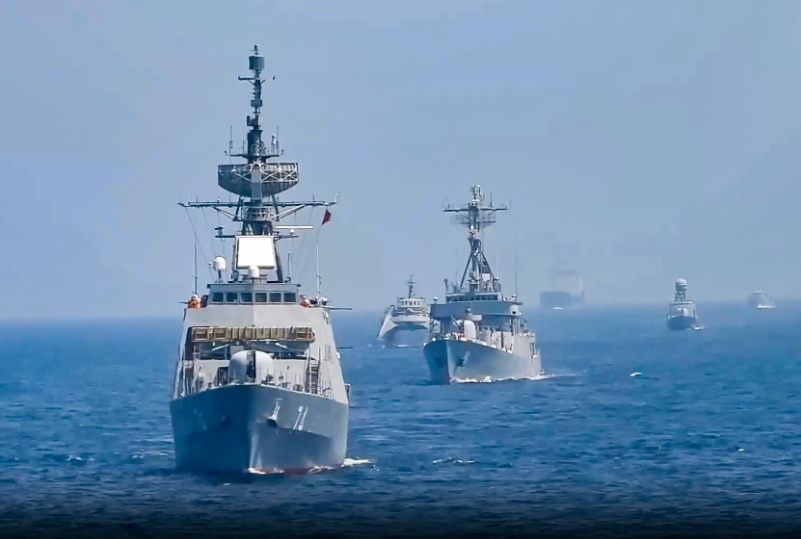
South Africa’s hosting of multinational naval exercises led by China, with warships from China and Iran docked in Cape Town ahead of drills scheduled from January 9 to 16 under “Will for Peace 2026,” has stirred significant geopolitical debate. The exercises, framed by Pretoria and its partners as a contribution to maritime security and safeguarding trade routes, occur at a time of heightened global tension and shifting power balances.
From a strategic cooperation standpoint, these joint exercises underline South Africa’s intent to project influence within the BRICS+ framework and deepen military-to-military ties with nations that are critical to its emerging-market partnerships. Participants are expected to include warships from Russia alongside those from China and Iran, indicating a broader coalition of navies seeking to demonstrate multiparty maritime cooperation. However, this alignment carries complex implications beyond regional security training.
For South Africa’s foreign policy calculus, the optics and diplomatic consequences are multifaceted:
- Relations with the United States and Western allies are sensitive. Washington has previously signaled disapproval of South Africa’s close ties with Beijing and Moscow, and the inclusion of Iran, a state under heavy U.S. sanctions, intensifies concerns about perceived alignment with countries that U.S. policymakers view as adversarial. This could translate into renewed diplomatic friction or economic repercussions.
- Domestic political critique has emerged regarding transparency and strategic clarity. Opposition voices argue that such exercises may contradict South Africa’s public commitment to non-alignment and risk undermining trust with democratic partners.
- Economic stakes are also in play. Sustained diplomatic tensions with the U.S. and EU may extend into trade, particularly if perceived defense cooperation with sanctioned states begins to affect investor confidence or preferential market access frameworks. Defense analysts caution that while cooperative drills can have tactical benefits, the broader geopolitical and economic risks merit careful consideration.
Ultimately, South Africa’s naval engagement with China, Iran, and possibly Russia is emblematic of a broader global shift. As emerging powers press for a more multipolar world order, countries like South Africa find themselves navigating between traditional Western partnerships and new strategic alignments. The challenge for Pretoria will be to balance these relationships in a way that preserves strategic autonomy without sacrificing economic interests or international standing.



Leave a Reply