



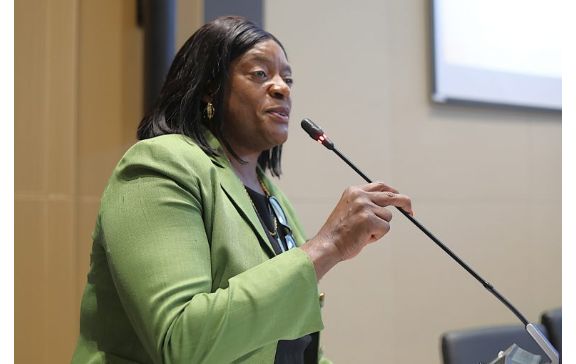
Government delegations from Zambia and Madagascar have officially commenced the 2026 Home-Grown School Meals (HGSM) Study Tour in the Republic of Korea, aimed at strengthening school feeding programmes to improve child nutrition, support local agriculture, and enhance student retention and learning outcomes.
Speaking during the opening session, Permanent Secretary (Administration) in the Office of the Vice President, Mrs. Lillian Kapusana, underscored the importance of providing nutritious meals to school-going children, emphasizing that a hungry child cannot learn.
Mrs. Kapusana noted that school feeding programmes are not merely social interventions, but strategic national investments in human capital development, food security, and poverty reduction.
“For Zambia, the Home-Grown School Feeding Programme is a flagship initiative aimed at improving child nutrition, enhancing educational outcomes and strengthening long-term national development. The programme targets the most vulnerable children, those whom government has a duty to protect, support, and uplift,” she said.
She explained that Zambia’s Home-Grown School Feeding Programme is a government-led initiative designed to provide nutritious meals to school children, particularly in rural and food-insecure communities, while simultaneously supporting local farmers and stimulating rural economies through localized food procurement systems.
“The programme contributes significantly to reducing malnutrition, stunting, and micronutrient deficiencies, while also improving school attendance, enrolment, and learner concentration in classrooms,” Mrs. Kapusana stated.
The Permanent Secretary further stressed that food and nutrition remain central to Zambia’s national development agenda and revealed that the school feeding programme forms a key component of the Government’s forthcoming nationwide strategy known as the Sustainable Resilience Strategy (SRS).
She thanked cooperating partners, including the World Food Programme (WFP), for their continued support in the formulation and implementation of the initiative and called upon additional partners, including the World Bank, to strengthen collaboration in scaling up the programme.
Highlighting Zambia’s nutrition challenges, Mrs. Kapusana noted that the country’s current stunting levels stand at 32 percent, with government targeting a reduction to 15 percent through an ambitious whole-of-government approach.
“We are grateful for this opportunty to learn from the Republic of Korea’s school feeding system, particularly how it is planned, financed, and efficiently managed. We look forward to gaining practical experience through field visits, expert lectures and technical discussions that will strengthen our national programme,” she said.
Ms Kapusana urged delegates to remain mindful of the broader impact of their participation in the study tour. “Behind this programme is a child, a parent, and an entire community whose future can be transformed through effective school feeding systems,” she added.
Speaking earlier, Zambia’s Ambassador to the Republic of Korea, His Excellency Andrew Banda, noted that he himself was a product of Zambia’s free education system, just like the President of the Republic of Zambia, President Hakainde Hichilema, although school feeding was not part of the programme at the time.
The Ambassador Banda observed that while Zambia’s GDP was higher than that of the Republic of Korea in the 1960s, South Korea had since achieved remarkable economic transformation through sustained investment in education, information technology, discipline, and community-driven development initiatives such as the Saemaul Undong Movement.
Leave a Reply