



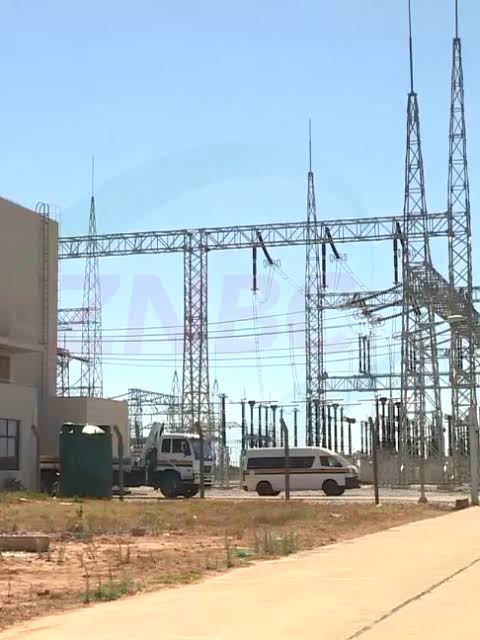
Zambia has secured another major private sector investment in electricity generation with the signing of a US$450 million Investment Promotion and Protection Agreement between the Zambia Development Agency and Ndola Vioqua Energy Company Limited for a 450MW thermal power plant in Ndola.
The project will be developed in two phases, with Copperbelt Energy Corporation expected to serve as the off-taker for the electricity generated. According to the Zambia Development Agency, the investment is expected to create approximately 640 jobs during construction and plant operations while opening opportunities for local suppliers, contractors and service providers.
The significance of the project extends beyond the addition of another generating facility. Zambia’s electricity demand has been rising alongside activity in mining and industry, placing greater pressure on the country’s generation system. The Ministry of Energy recorded installed generation capacity of about 3,871MW in 2024, with hydropower accounting for the largest share of the country’s generation mix.
For the Copperbelt, where mining and industrial activity are major drivers of economic activity, electricity availability is closely tied to production. A 450MW facility in Ndola therefore has potential implications for more than the national power balance. It could support industrial users in one of Zambia’s most economically important regions and provide additional capacity as demand continues to grow.
The project also comes against the backdrop of a much larger push to expand Zambia’s electricity generation base. In December 2025, the Ministry of Energy said the country faced a power deficit of more than 1,600MW and highlighted a pipeline of projects expected to add 2,610MW of new capacity. The Ministry also said national demand had exceeded 2,400MW and was approaching 3,000MW.
The Ndola project is consequently part of a broader shift towards greater private participation in Zambia’s power sector. The government has been seeking investment in solar, hydro, thermal and other generation projects as it works to expand capacity and improve energy security. The ZDA has positioned the IPPA as providing an investment protection framework intended to support long-term private investment in energy infrastructure.
The choice of Ndola is also commercially relevant. The city sits at the heart of the Copperbelt’s industrial economy and is connected to one of the country’s largest concentrations of mining, manufacturing and commercial activity. For investors, additional power capacity can influence the economics of operating and expanding energy-intensive businesses.
There is also a local business opportunity attached to the project. The expected 640 jobs are only one part of the potential economic impact. Construction and plant operations can create demand for engineering services, transportation, maintenance, security, accommodation, catering, equipment supply and other services. The extent to which Zambian companies capture those opportunities will depend on procurement structures and the project’s implementation.
Ultimately, the US$450 million investment illustrates the growing recognition that Zambia’s mining ambitions cannot be separated from its energy strategy. The country is seeking to expand mineral production while simultaneously building the electricity infrastructure required to support that expansion.
For Ndola and the wider Copperbelt, the question now moves from whether additional power is needed to how quickly projects such as the 450 MW plant can progress from agreements to actual generation. In Zambia’s next phase of industrial growth, megawatts are increasingly becoming as important as mineral tonnes.


Leave a Reply