



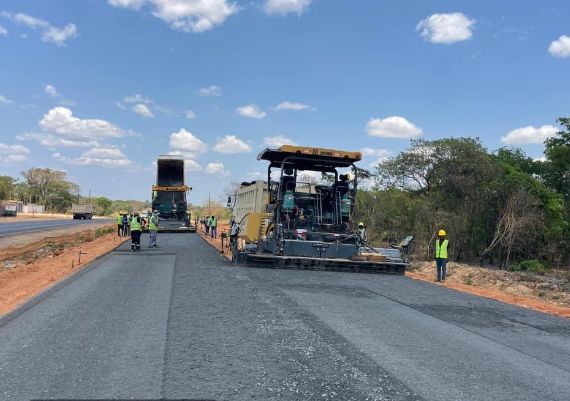
The Zambian government has officially launched the K3.2 billion rehabilitation of the Livingstone–Sesheke Road, one of the country’s most strategically important transport corridors. The project is expected to improve regional connectivity, facilitate trade with neighbouring countries and strengthen Zambia’s tourism industry by modernising a route that serves as a vital gateway to Namibia and the wider Southern African region.
The Livingstone–Sesheke Road forms part of the Trans Caprivi Corridor, a major regional transport network connecting Zambia to Namibia’s Port of Walvis Bay. The corridor provides an important alternative export and import route for businesses moving goods between Southern Africa and international markets. Once rehabilitated, the road is expected to reduce travel times, improve road safety and lower transport costs for freight operators, businesses and motorists.
Beyond facilitating cross-border trade, the project is expected to support Zambia’s growing tourism industry. Livingstone remains one of the country’s premier tourist destinations due to its proximity to Victoria Falls and several wildlife attractions. Improved road infrastructure will make travel more efficient for both domestic and international visitors while supporting businesses operating in hospitality, transport and tourism services.
The rehabilitation is also expected to deliver significant economic benefits to communities along the corridor. Better road infrastructure will improve market access for farmers, ease the movement of agricultural produce and strengthen supply chains for businesses operating in Western and Southern provinces. Construction activities are also expected to generate employment while stimulating demand for local goods and services.
The investment aligns with the government’s broader infrastructure development agenda, which prioritises roads, railways and border facilities as key enablers of economic growth. Zambia has increasingly focused on improving regional transport corridors to enhance competitiveness under the African Continental Free Trade Area (AfCFTA) and position itself as a logistics hub linking Southern, Central and Eastern Africa.
Analysts note that efficient transport infrastructure is becoming increasingly important as Zambia seeks to diversify its economy while supporting the expansion of mining, agriculture and tourism. Reduced logistics costs can improve export competitiveness, attract private investment and encourage industrial development along major transport corridors.
With construction now underway, the Livingstone–Sesheke Road rehabilitation represents another major investment in Zambia’s long term infrastructure network. Once completed, the project is expected to strengthen regional integration, facilitate trade with neighbouring countries and reinforce Zambia’s position as a key transport gateway in Southern Africa.


Leave a Reply