



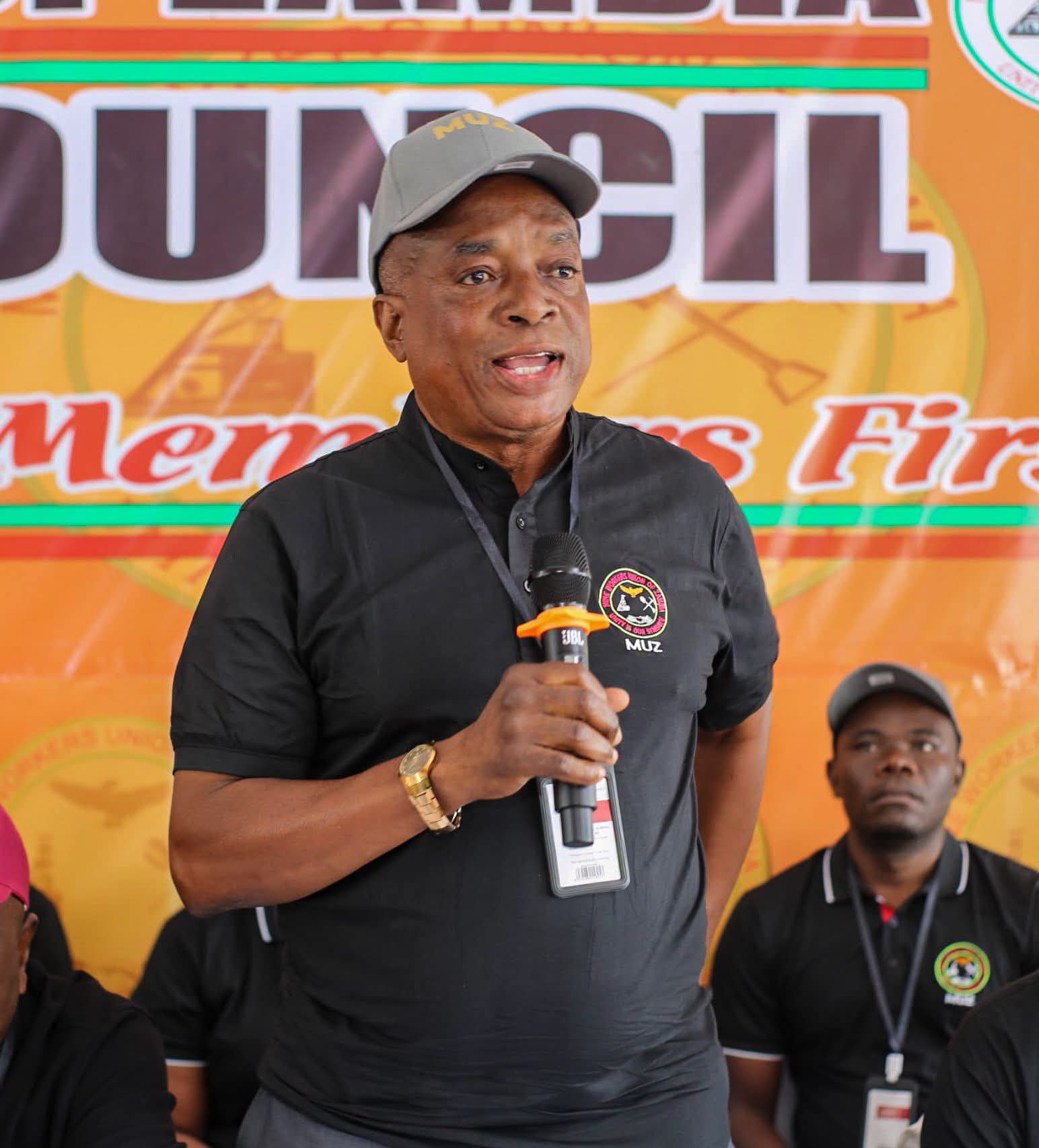
By John Chola
Zambia’s mining industry has lost one of its longest-serving and most influential trade union leaders following the death of former Mineworkers Union of Zambia (MUZ) President Andrew Mwanza, whose leadership helped steer mineworkers through the turbulent privatization of the country’s copper industry.
Mwanza, the 10th President of the Mineworkers Union of Zambia, died on Wednesday, July 22, 2026, after a short illness, according to his family.
He served as MUZ President from 1998 to 2005, a pivotal period that coincided with the privatization of the former Zambia Consolidated Copper Mines (ZCCM), one of the most significant transformations in the country’s mining history.
The transition reshaped Zambia’s copper industry, bringing new private investors into the sector while presenting major labour challenges, including job losses, restructuring and difficult negotiations over workers’ conditions.
Paying tribute to the late unionist, MUZ current President Joseph Chewe described Mwanza as a principled and courageous leader whose commitment to protecting mineworkers earned him widespread respect across Zambia’s mining and labour movement.
“His principled leadership, courage and dedication earned him admiration across the mining sector and the labour movement as a whole,” Chewe said.
Chewe said Mwanza remained steadfast in championing decent work, job security, fair labour practices and the protection of miners’ livelihoods during one of the industry’s most demanding periods.
He added that Mwanza firmly believed that a united labour movement was essential to strengthening collective bargaining and safeguarding workers’ interests.
“Even after leaving office, Mr. Mwanza continued to offer guidance on labour matters and remained an influential voice on issues affecting mineworkers and trade unionism in Zambia,” Chewe said.
Mwanza’s tenure came at a defining moment for Zambia’s mining sector as the industry transitioned from state ownership to private investment.
During that period, mining unions played a central role in negotiating employment conditions, severance packages, workplace safety standards and workers’ rights amid sweeping structural reforms.
His leadership is widely remembered for advocating dialogue between mineworkers, mining companies and government while defending the welfare of thousands of miners whose livelihoods were affected by the industry’s restructuring.
The Mineworkers Union of Zambia said Mwanza’s contribution extended well beyond his years in office, noting that he remained an important adviser and respected voice on labour issues long after completing his term.
On behalf of its National Executive Committee, management, staff and members, the union extended condolences to the Mwanza family, friends and the wider mining fraternity.
MUZ said it would continue to uphold the values that defined Mwanza’s leadership, including unity, solidarity, justice and the protection of workers’ rights.
Funeral and burial arrangements are expected to be announced by the family in due course.

Leave a Reply